Showing posts with label gear hardware. Show all posts

Sunday, January 4, 2009

Kodak Zi6


We picked up a Kodak Zi6 when they first shipped a few weeks ago, and have been playing with it, taking it through it's paces and evaluating it for both professional and personal use. It's a small 720p HD "lifestyle" camera, capturing to digital SDHC media. They sell for around $170 on Amazon, including a set of rechargeable AA batteries and a charger. It doesn't come with a SDHC card, which is kind of silly, since you only get about thirty seconds of recording time with the built in memory. So be sure you've got some digital media ready to go when you get the unit. You'll need it.

It's an impressive little unit, for what it does, and for what it costs. It's almost completely automatic, with very few customizable settings. On the pro side of things, we were interested in this unit as an HD lipstick cam, being able to clamp or velcro it to just about anything. For the price it's just about disposable, so I don't get too concerned about putting it in harms way. The lens is fairly wide, but certainly not a fisheye. There's a small slider to switch the lens into macro mode, and you can do a digitial zoom if needed. No optical zoom.

I've been experimenting with using this camera as a reference camera for shooting things like people giving powerpoint presentations. Shoot the speaker with our Sony EX-3, tight, but shoot the room with the Zi6, giving a reference for exactly which slide the speaker was on at any given time during their presentation. It works pretty well for this, with a couple of limitations.

The biggest "Huh?!?" with this camera is that there is no "time remaining" indicator for the memory card. You have no idea how much remaining time you have. This sounds like a big deal (and it is) but on the other hand, you can put a 16gig card in there and be confident that your time remaining is "gobs," certainly enought to get you through a typical presentation.

The unit makes chirping sounds to indicate when you start or stop recording, and you can't disable them. This is could be bad in a pro situation.

So, over all, it's got come possibilities for pro use. I could see strapping this thing to a mountain biker or any other rough-duty location, and chances are it will perform fine. The HD video looks good, provided you've got a reasonable amount of light. (It drops down to 15 frames per second under low light situations.) The built in USB interface lets you load the footage into your Mac or PC as standard MP4 files.

What's been interesting, and unexpected, is how much we've been using this for personal use. We did a lot of recording over Thanksgiving and Christmas with this, mainly because it's just so easy to pick up and start using. Plus, you can stick it in your pocket, purse or glove compartment in your car and always be ready to capture video. The convenience factor has meant that we've been shooting a lot more video than we ever did with our Canon HV20. Havng no real zoom means it's not very practical for something like a kid's recital at school where you need to zoom in from the back of the room, but for family gatherings this thing is a lot of fun.

So, the bottom line, for us, is that this thing is a no brainer to have around for the price. We keep finding cool new ways to use it. The lack of features is somewhat frustrating from a pro point of view, but the size and low cost make up for a lot.

Support PixelCadabra Via Our Amazon Main Page


Add to Technorati Favorites

Friday, March 28, 2008

Simply Red

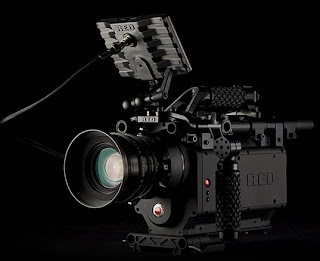
I ran into a good friend of mine at a local cafe the other day, and he was telling me about a panel discussion he was involved with on digital cinema. Several cameras were on display, including HD cams from Sony and Hitachi, but the star of the show, the real reason everyone attended, was to see the Red One from Red Digital Cinema. Of course, the Red One has been the talk of the industry for a few years now, and is either the most amazing piece of disruptive technology in the history of cinema, or the biggest pile of vaporware to come down the pike, depending on who you ask. 

When the Red was first announced I was as skeptical as the next guy, having been in the biz for a few years and having been through product announcements like the Play Trinity system, among others, products that were the hype of NAB for a few years running, then, if they managed to ship at all, usually

 shipped with greatly reduced feature sets, greatly inflated prices, or a little of both. So, while the Red One sounded cool, I thought it best to take a wait and see attitude. 

Sure enough, at NAB last year Red had a pretty amazing little short feature, directed by Peter Jackson (yes, THE Peter Jackson), using two of the beta Red cameras. I saw it in the Red theater on the show floor, and it was very impressive. It seemed like the Red One was for real, and people were signing up in droves to get on the waiting list to purchase one. The Red booth was more crowded than church on Easter Sunday, and yet there were still plenty of naysayers, people who didn't believe they could possibly ship a camera system with that kind of image quality for that kind of money.

I came home from NAB, and one of the DPs I work with sat down with me and peppered me with question about the Red One. We knew an HD camera was in our future, and the Red was certainly no more expensive than any of the other high-end or even mid-range HD cams, so it was worth considering. And consider we did, but ultimately I decided that the Red just isn't for us, not now.

The way I see it, the Red One is a digital cinema camera, not an HD video camera. What's the distinction? Simply put, the Red is designed to take the place of a movie camera, a 35mm or 16mm camera, not a video camera rig. The Red One is best used with prime lenses, instead of the servo driven zooms video camera operators are used to. For digital cinema that's great, but for a shop like ours that shoots a wide variety of shows, the limitations of the Red make it impractical for us. You couldn't use the Red to go shoot someone giving a speech at a conference, for example, one of those oh-so-boring-but-it-pays-the-bills assignments that most shooters get from time to time. (I suppose, technically, you could use the Red for that, but you get my point. It's not an ideal tool for that kind of situation.) 

No, for us, we need something more versatile, and also something more mature than the Red currently is. As gorgeous as the Red One is, she's still a finicky girl, with software update coming fast and furious. Again, fine if you're doing dramatic work, and can risk the need for reshoots, but not so good for covering live events, or productions with tight budgets,

This is not the say the Red isn't impressive for what it's accomplished. It really is amazing, and I have to wonder how many sleepless nights it's caused for the execs at Sony and Panasonic. It is truly a disruptive technology, and I think having it in the mix is a good thing for everyone. 

But for us, for now, if we need the super high resolution images of the Red One, we'll hire an owner/ operator who's intimately familiar with the quirks of the system, and rely on a more traditional HD camera system for our day to day work.

Support PixelCadabra Via Our Amazon Main Page


Add to Technorati Favorites

Thursday, January 31, 2008

Screwed by Panasonic (So tell us Dave, how do you REALLY feel?)

Pardon me while I get off on a little bit of a rant here. There is a lesson here, one that's valuable to every business owner no matter how big or small your company is.

For the past few years our main camera has been the Panasonic SDX-900 DVCPro 50 camcorder. It is, in my humble opinion, the best looking standard-def camera ever made. It has an amazing 24p 16x9 mode with incredible shadow detail. This camera is so good that it had allowed us to put off buying HD camera gear much longer than we thought we would have to. Most of our projects get delivered online or on DVD, and this camera is perfect for delivering top-notch pictures for those circumstances. If we needed to shoot in actual HD we rented a Varicam or CineAlta. (We're in the process of executing our HD upgrades...but that's another blog post!)

Well, as sometimes happens in this biz, we were out in the field and a case fell on the SDX-900's soft bag (while the camera was in it), and the viewfinder snapped off. You can see in this picture where the metal sheared. A little gaffers tape got us through that shoot, and I wasn't all that stressed about the situation. It was an honest accident, and budgeting for repairs is just part of doing business.


I had my favorite repair shop, Contract Video Specialists, email me a parts list, and I put in an order for the replacement part. As you can see in the picture, the broken part is a piece of stamped metal, with a Panasonic logo and some plastic where the tally light shines through. There are no electronics, and Panasonic doesn't make you order the whole viewfinder.

My friend from Contract Video called me back.

"Are you sitting down?" she asked me.

"Yes."

"How much do you think that part costs?" she teased.

Now, having been in this biz for more than a handful of years, I'm used to paying premium prices for parts. It's just something you've got to live with, since you can't comparison shop for these things.

"I dunno...a couple hundred bucks?" I responded, launching us into the High/Low game from The Price is Right.

"Higher..."

"Three Hundred?"

"Higher..."

"Four Hundred?"

"Higher..."

"Five Hundred?"

"Higher..."

"Six Hundred?"

(At this point I'm laughing, because of the absurdity of the situation.)

"Seven Hundred?"

Seven hundred dollars, my friends. That little scrap of stamped metal costs seven hundred dollars. Let's all take a moment and let that sink in. (Hum the Jeopardy theme, if you'd like...)

My friends at Contract Video were apologetic, and sympathetic, and just as shocked as I was. But I had no choice, of course. I needed to part, so Panasonic got my $700.

But here's the thing, and the lesson in this tale. I went into this expecting to pay a premium, expecting to pay much more than the part would be worth in a non-pro-video scenario. Like I said, paying high prices for replacement parts is just a part of doing business, and we budget for it. Up to three hundred dollars and I wouldn't have been shocked. A bit annoyed, perhaps, but not shocked.

But seven hundred bucks? Sorry, folks, we've crossed the line from premium pricing into aggressive profiteering. It's unreasonable, and it's seriously soured my view of Panasonic and my feelings on owning this camera. Just like that, in one quick, silly stroke of greed, Panasonic burned through years of built-up good will they had earned with me. Now, when someone asks me what I think of my Panasonic camera, my stories are tempered with warnings that, yes, the gear is high quality, but be prepared to bend over when it's time to buy parts. (Sorry...that's an image none of us needed...)

By the way, I emailed and snail-mailed Panasonic about this, figuring at the very least someone would want to know how ultimately short-sighted this pricing policy is. Never heard back from them. Which, of course, makes it even worse.

We all have our thresholds when it comes to pricing and customer service. What's yours? Do you have a good feel for what your clients are willing to bear? Is it really worth dinging them for that double-overtime rush charge, or is it sometimes better to be the hero, to come through in the rush situation and earn their loyalty and trust? (It depends on the client, IMHO...)

What do you think?

Support PixelCadabra Via Our Amazon Main Page