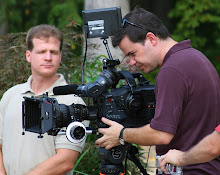
Showing posts with label interviews. Show all posts

Tuesday, March 4, 2008

Be So Good They Can't Ignore You


Recommended reading - Born Standing Up - A Comic's Life 

I recently finished this Steve Martin autobiography, and I highly recommend it, especially for those of us in the creative fields. The book focuses on Martin's rise to fame as a standup comedian in the 70s, how he built his act and why he ultimately chose to walk away from it. Even if you're not a huge Steve Martin fan you'll find there's plenty of insight into the creative process, the development of craft, and the choices one makes throughout life. It's a good, quick read, worth your time.

An interesting point Martin makes is to "be so good they can't ignore you." In other words, if you're the best at what you do people will seek you out, which is much easier on you than having to go door to door selling your wares. Most of us land somewhere in the middle, of course, but it's an interesting philosophical point. Do you want to be known as "the best in town," or "the cheapest in town," or perhaps "the best value in town?" Each option has ups and downs, for immediate and long term growth. When you're starting out it's easiest to be cheap, especially when you don't have much to show. But having a reputation as "the cheap shop" is very tough to shake off in the long run. Food for thought.

Also worth checking out is this interview from The Charlie Rose show. Jerry Seinfeld is first, followed by Martin. 


Support PixelCadabra Via Our Amazon Main Page


Add to Technorati Favorites

Monday, March 3, 2008

Preparing for the Interview

Let's start off today with a brief video clip -


Ahem. Yes.

This little gem illustrates a couple of points. First, the young lady doing the interview is clueless. She also seems to be someone who seems to be quite comfortable in her cluelessness. She seems to wear it as a badge of honor, or, at the very least,  is used to getting through life in spite of it. 

Second, John Cusack is a true professional, suffering through what is clearly an excruciatingly dull press junket. In a way, this was probably one of the more amusing moments of his day, and he's smart enough that he probably enjoyed toying with her. 

The main point, though, is how important it is to prepare for your interviews. Do your homework, do your research, invest time in preparing. I doesn't matter if you're interviewing the biggest star in Hollywood or your grandmother, the more you know going in, the better results you'll get. One of the most critical elements for the success of any interview is establishing rapport with your interview subject. Putting them at ease makes it much more likely they'll open up, relax, and share their story with you in an engaging, personal way.
I was once shooting for a producer who interviewed people like they were on a witness stand. He'd bark out the same preprepared questions, not looking at them, not listening to a word they said, not asking a single followup question. It made for a horrible experience for the people being interviewed - they couldn't wait to get the hell out of there. It was aggravating for me, because I kept thinking about all of the great material he would have been able to get if he would just listen to the people he was interviewing.

Interviewing is a skill, and the more you do it the better you'll get. My wife and business partner, Ilana, is a master at the sit-down interview, after almost fifteen years experience. She's able to sense when people are nervous, put them at ease, and get the answers she needs for the story she want to tell. Many times she'll ask a half dozen or more questions to start that have nothing to do with the subject at hand, just to be able to build rapport, put the subject at ease, and get them to relax. Sometimes she senses the person being interviewed is completely comfortable from the get-go, she gets what she needs and sends them on their way, not wasting anyone's time. She's a pro, and she makes it look easy. 

Who can you look to for inspiration? Some of my favorite interviewers are Charlie Rose, James Lipton and Terri Gross. (And for a fascinating example of a good interviewer faced with a bad interviewee, check out this example of Terry Gross interviewing Gene Simmons from Kiss.)

Who do you like? Who's interview technique inspires you?

Support PixelCadabra Via Our Amazon Main Page


Add to Technorati Favorites

Wednesday, January 2, 2008

Say Your Name and Spell It

Here's a simple, yet often overlooked technique that will make your editors love you, save you and your clients time and energy, and will make you irresistable to members of the opposite sex. Okay, that last one's an exageration (and by exageration I mean "lie").

When doing on-camera interviews, roll tape (or start capturing to your memory card, as the case may be) and ask the talent, "Could you please say your name and spell it for me?"


This does several things for you. First of all, it gives you a record of the correct pronunciation and spelling of the person's name, specifically, the way they prefer to be identified. Your editors and graphics people will thank you for this, since they won't have to chase down this info for lower thirds, and they won't end up making last minute changes because no one knew that Sir Richard Dovington the Third preferred to be called "Skippy."

Perhaps more importantly, though, making this "no brainer" your first question sets the tone for the interview, and puts the subject at ease. They're thinking, "Hey, this is easy! I can answer that! Maybe this won't be so bad!"

In fact, when interviewing someone who's visibly skittish about being on camera, it's often best to have a few soft-ball questions lined up to use first, to help establish repore and give them time to get comfortable.

Interviewing is a skill, and the more you do it, the better you'll be. You'll develop a sense for what you need, what you don't and how to guide your subject toward the content you're looking for through the clever formulation of your questions.

Oh, one more thing - We've found it much more effective when dealing with non-professional talent to use an interview technique, rather than having them read from a prepared script. They tend to come across much more naturally when having a "conversation" with the interviewer (even though the interviewer is never seen) than if they are reading prepared copy, usually written by the folks in marketing and gutted by the folks in legal.

What do you think? Got any lower-third nightmares to share?

Support PixelCadabra Via Our Amazon Main Page